
Back to all postsNews
Apple Unveils Touchscreen OLED MacBook Pro: 7 Major Changes
John
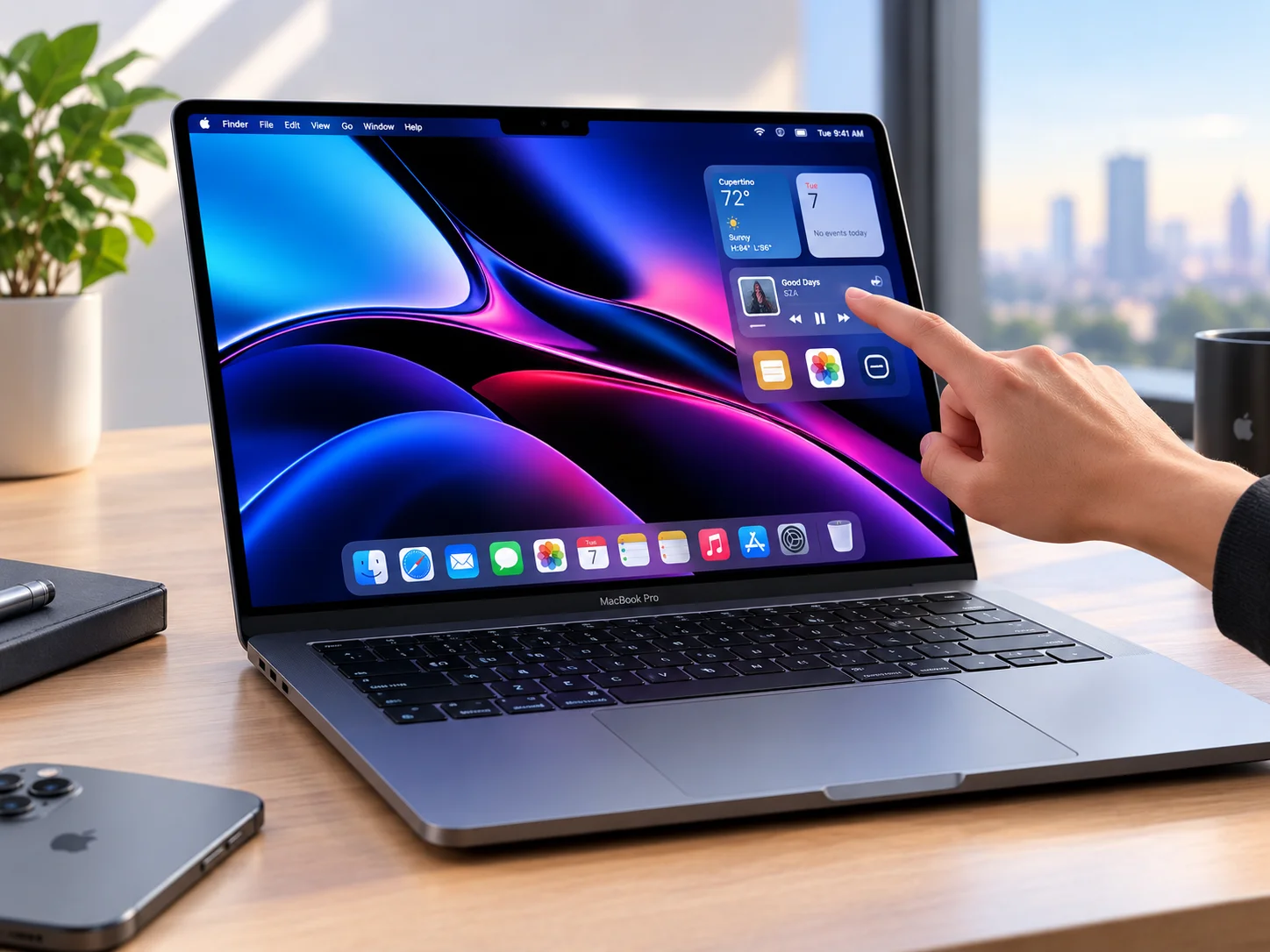
Apple has officially introduced a redesigned MacBook Pro featuring an OLED display, touchscreen support, a lighter design, and several major upgrades aimed at creative professionals. Announced on October 28, 2026, the new 14-inch and 16-inch MacBook Pro models mark a significant change for Apple's professional laptop lineup by bringing touch interaction to the Mac for the first time.
The new laptops feature Apple's tandem OLED technology, branded as PROLED XDR, alongside M5 Pro and M5 Max chips, a Dynamic Island, improved connectivity, and up to 24 hours of claimed battery life.
Apple is positioning the redesigned MacBook Pro as a powerful option for video editors, photographers, designers, musicians, developers, and other professionals who need high performance in a portable computer.
Here are the seven biggest changes coming to Apple's new MacBook Pro.
1. Touchscreen Support Arrives on MacBook Pro
The biggest change is the addition of touchscreen support, allowing users to interact directly with macOS by touching the display.
Users can scroll through webpages, pinch to zoom into photos, drag and drop presentation elements, and rearrange windows using touch gestures. Creative professionals can also interact directly with compatible applications, including drawing on designs, adjusting video timelines, and playing virtual musical instruments. Apple has designed the touchscreen to work alongside the keyboard, trackpad, and familiar macOS controls rather than replacing them.
A redesigned hinge provides additional stability when users touch the screen, while software optimizations are intended to make touch interactions feel responsive. The feature could be particularly useful for artists and creators who want more direct control over their work without giving up the traditional laptop experience.
2. Tandem OLED Display Delivers Improved Picture Quality
Apple is replacing the previous display technology with its new tandem OLED-based PROLED XDR display.
The display offers several notable specifications:
Up to 2,000 nits of peak HDR and SDR brightness, according to Apple.
A claimed contrast ratio of 10,000,000:1.
ProMotion technology with an adaptive refresh rate of up to 120Hz.
Support for the P3 and Adobe RGB color spaces.
An optional nano-texture finish designed to reduce reflections.
OLED technology allows individual pixels to control their own light output, helping deliver deeper blacks and stronger contrast. The tandem OLED design uses two self-illuminating pixel layers to improve brightness and display performance.
These improvements could be particularly valuable for photographers, filmmakers, video editors, and designers who need accurate colors and detailed images. The combination of high brightness, deep blacks, and a wide color gamut should also improve everyday activities such as watching movies, viewing photos, and working in bright environments.
3. A New Dynamic Island Replaces the Display Notch
The redesigned MacBook Pro introduces a Dynamic Island at the top of the display, replacing the previous camera notch. Inspired by the feature on the iPhone, the Dynamic Island provides a compact area for notifications, system controls, and live information.
Apple says it will serve as a home for Spotlight, Live Activities, and Siri AI. Users can search their Mac, access updates, control music, and interact with supported information without interrupting their current task. The feature also gives the redesigned display a different appearance while allowing Apple to reduce the space occupied by the camera cutout. For users who regularly multitask, the Dynamic Island could provide a more convenient way to access information while keeping the main workspace clear.
4. M5 Pro and M5 Max Power the New Models
The new touchscreen MacBook Pro models are powered by Apple's M5 Pro and M5 Max chips.
These processors are designed for demanding professional workloads, including video editing, 3D rendering, software development, music production, and advanced image processing. Apple says the redesigned thermal architecture allows the new laptops to maintain sustained performance despite their thinner and lighter construction.
The machines support up to 128GB of unified memory and up to 16TB of storage, depending on the configuration. It's important to distinguish these models from Apple's separate entry-level 14-inch MacBook Pro with the M6 chip. The touchscreen OLED versions use M5 Pro and M5 Max processors.
5. The New MacBook Pro Is Thinner and Lighter
Apple has also redesigned the MacBook Pro's physical construction. The new 14-inch model weighs approximately 3 pounds, while the 16-inch model weighs approximately 4 pounds.
According to Apple, the 14-inch version is half a pound lighter than its predecessor, while the 16-inch model is 0.7 pounds lighter. The slimmer display technology helps reduce the overall thickness of the machines. Apple has also redesigned the thermal system to maintain performance while directing warm air away from the display.
The screen sizes remain close to their familiar dimensions, with the 14-inch model featuring a 14.2-inch display and the 16-inch model offering a slightly larger 16.3-inch display thanks to slimmer bezels. These changes could make the new MacBook Pro more convenient for professionals who travel frequently or carry their laptops between workspaces.
6. Improved Audio, Connectivity, and Charging
The redesigned MacBook Pro includes several hardware improvements beyond the display and processor.
Apple has upgraded the six-speaker sound system, claiming 50% deeper bass compared with the previous design. The laptops also feature a 12-megapixel Center Stage camera and studio-quality microphones for video calls and content creation.
Connectivity includes:
Three Thunderbolt 5 ports.
HDMI.
An SDXC card slot.
MagSafe charging.
A headphone jack.
Wi-Fi 7 and Bluetooth 6.
Apple says the new models can charge to 50% in approximately 30 minutes when using a compatible power adapter.
The M5 Pro configuration supports up to three external displays, while M5 Max models support up to four, making the laptops suitable for users who work with multiple monitors. Together, these features make the new MacBook Pro a more capable workstation for creative and professional environments.
7. macOS 27 Adds Touch-Friendly Features and Siri AI
The new MacBook Pro runs macOS 27, which has been designed to support the touchscreen experience. Apple says its software can automatically translate touch input into clicks, allowing many existing applications to work with touch without requiring a complete redesign. Developers can also use updated system gesture APIs to create dedicated touch experiences.
Apple's own applications are optimized for the new input method. In Final Cut Pro, users can interact directly with clips and timelines. In Pixelmator Pro, touch can help users draw, paint, and select elements. Logic Pro users can interact with virtual instruments and on-screen controls.
The software also includes Siri AI and Apple Intelligence features designed to assist with searching, writing, and other tasks across the operating system. Third-party applications from companies including Adobe and Microsoft are also expected to take advantage of the new touch capabilities. The result is an effort to combine the precision of traditional Mac controls with the direct interaction typically associated with tablets.
MacBook Pro OLED Touchscreen: Price and Availability
Apple opened pre-orders for the redesigned MacBook Pro on October 28, 2026. The new models are scheduled to begin arriving to customers and appearing in Apple Stores on November 6.
US starting prices are:
14-inch MacBook Pro with M5 Pro: $2,899.
16-inch MacBook Pro with M5 Pro: $3,399.
Higher-end configurations with M5 Max, additional memory, and larger storage capacities cost more. Apple also offers education pricing for eligible customers. The laptops are available in Silver and Space Black, with standard and optional nano-texture display configurations. Prices and availability may differ by country, so buyers should check Apple's regional store for local pricing and purchasing options.
Is the New Touchscreen MacBook Pro Worth It?
Apple's redesigned MacBook Pro is a significant upgrade for users who want a more interactive display without moving away from macOS. The tandem OLED screen, touchscreen controls, Dynamic Island, lighter construction, and improved connectivity make the new models particularly interesting for creative professionals.
However, the higher starting prices mean that buyers should consider whether they will benefit from the new display and touch features. Users who primarily work with a keyboard and trackpad may find that an existing MacBook Pro remains sufficient for their needs. The touchscreen could be especially valuable for designers, photographers, musicians, and video editors who want to manipulate content directly on the display.
Final Thoughts
Apple's first touchscreen MacBook Pro introduces seven major changes, led by the tandem OLED display, direct touch controls, Dynamic Island, and lighter design. The use of M5 Pro and M5 Max chips keeps the focus on professional performance, while macOS 27 adds software features designed to make touch a natural extension of the traditional Mac experience.
With pre-orders already open and availability scheduled for November 6, the redesigned MacBook Pro could be one of Apple's most important laptop launches of 2026. For existing MacBook Pro owners, the decision to upgrade will depend on how useful touchscreen interaction and OLED display technology are to their workflow. For professionals looking for a new high-end Mac, however, the latest models introduce a compelling new direction for Apple's laptop lineup.

