
Back to all postsNews
Apple’s New AI Revolution
John
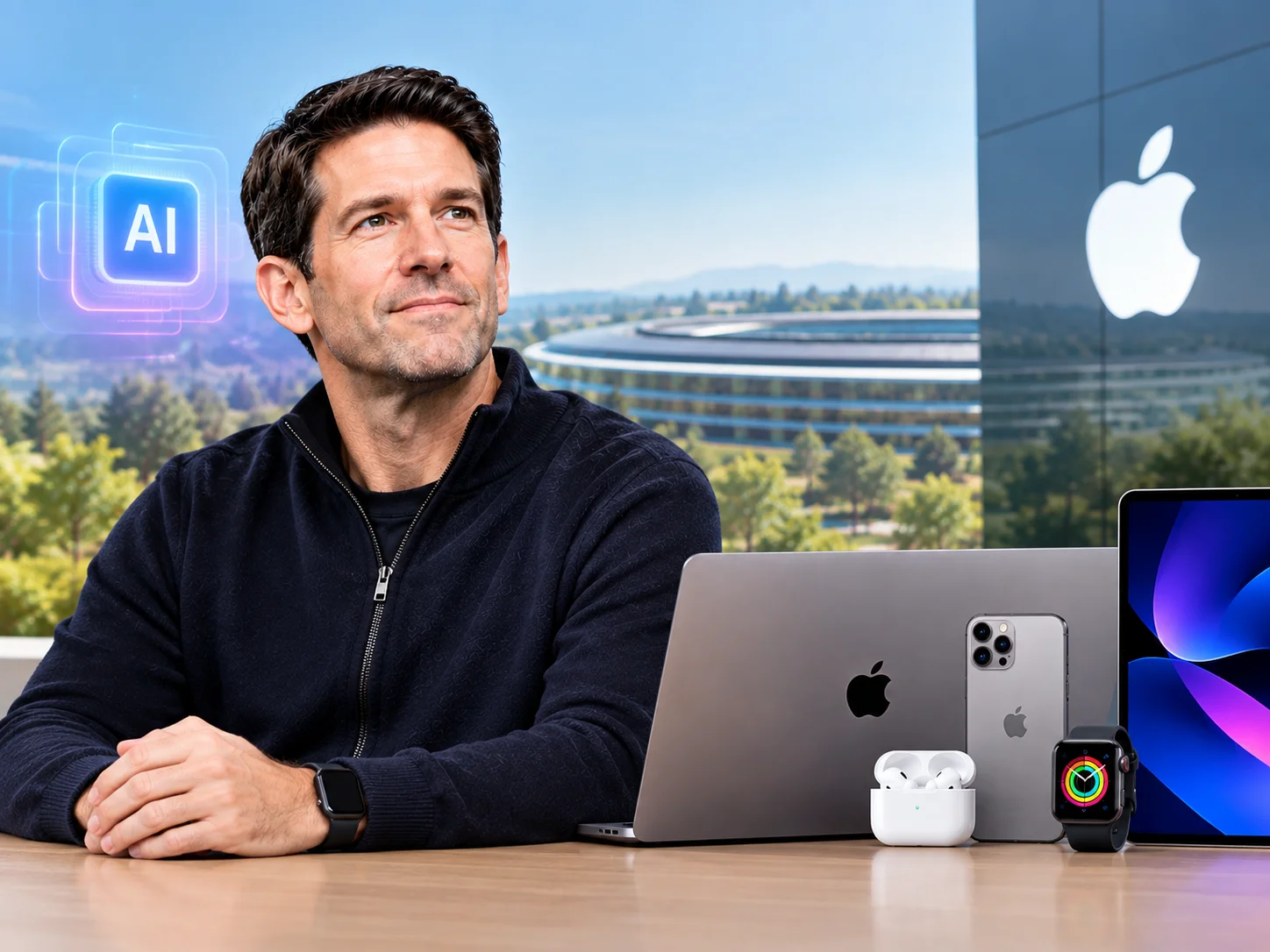
Apple has entered a new leadership era with John Ternus taking over as CEO on September 1, 2026, succeeding Tim Cook. His appointment comes at a critical time as Apple faces growing competition in artificial intelligence and works to expand AI capabilities across its ecosystem.
Ternus will be responsible for guiding Apple's AI ambitions while maintaining the company's focus on privacy, innovation, and seamless hardware-software integration.
Apple’s AI Strategy: A New Direction
Apple's AI strategy focuses on integrating intelligent features into products such as the iPhone, Mac, and AirPods. During Apple's September event, Ternus highlighted the iPhone's potential as an AI-powered device and emphasized Apple's commitment to privacy.
Rather than focusing exclusively on standalone AI chatbots, Apple aims to incorporate AI into products users already rely on. This approach could help the company connect AI features with its established hardware and software ecosystem.
1. Making Siri More Powerful
Improving Siri remains one of Apple's key AI priorities. Reports suggest the company is working toward a more advanced Siri with improved conversational abilities, complex search functionality, and deeper app integration.
Future Siri improvements could include:
More natural conversations
Better understanding of personal context
Cross-app task completion
Improved voice and text interactions
Deeper integration with Apple devices
However, Apple's ability to compete with advanced AI assistants will depend on how effectively it delivers these features.
2. Privacy as a Core AI Principle
Privacy continues to be an important part of Apple's AI strategy. The company has emphasized privacy-conscious product design while developing more intelligent experiences for users.
Apple faces the challenge of balancing powerful AI capabilities with data protection. On-device processing can help handle certain tasks locally, while cloud-based systems may provide additional computing power for more complex operations. Finding the right balance between privacy, performance, and functionality will remain a major priority.
3. Exploring AI Infrastructure
Apple is reportedly exploring AI server technology that could use its own silicon alongside Nvidia's NVLink Fusion technology. According to reporting based on information from The Information, the potential project could support AI inference workloads.
The reported plans remain subject to change and have not established a guaranteed final product or launch timeline. If developed, the initiative could expand Apple's custom-chip strategy beyond consumer devices and strengthen its AI infrastructure capabilities.
4. Growing Competition in Artificial Intelligence
Apple faces competition from companies developing AI assistants, foundation models, and AI-powered hardware. Industry analysts have highlighted Siri development, AI talent recruitment, and product innovation as important challenges for the company.
Apple's extensive hardware ecosystem gives it a platform for distributing AI features to millions of users. However, future success will depend on how effectively the company transforms that ecosystem into practical and reliable AI experiences.
What Can Apple Users Expect?
Apple's AI strategy under John Ternus is expected to remain closely connected to its core products. Key areas to watch include:
Siri improvements
AI-powered iPhone features
On-device AI processing
Privacy and security controls
Potential AI-focused hardware
Improved integration across Apple devices
Future product announcements and release timelines should be treated as unconfirmed until Apple provides official details.


