
Back to all postsNews
pple Smart Glasses Reportedly Target 2027 as New Vision Headset Enters Development
John
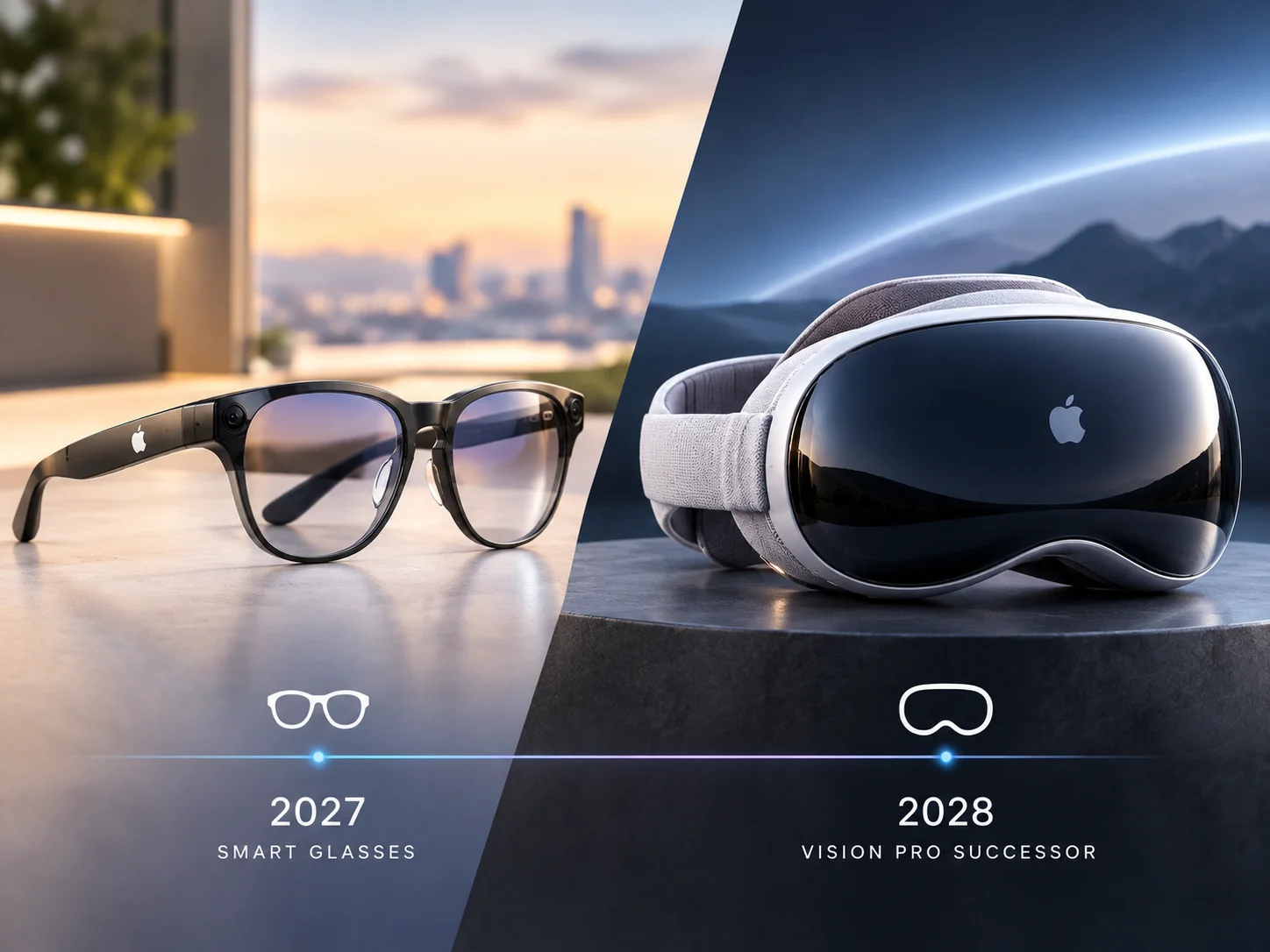
Apple is reportedly preparing for a major expansion of its wearable technology lineup, with its first smart glasses potentially arriving in late 2027 and a redesigned Vision headset reportedly targeting late 2028 or early 2029.
The reported roadmap comes from Bloomberg's Mark Gurman and was highlighted in recent reporting by AppleInsider and 9to5Mac. Apple has not officially announced either product or confirmed the reported release dates.
Apple Smart Glasses Reportedly Target Late 2027
Apple's long-rumored smart glasses are reportedly back in focus as the company shifts more resources toward lightweight wearable technology.
The glasses, reportedly known internally as N50, are expected to be significantly more practical for everyday use than the Vision Pro. Earlier reporting indicates Apple is targeting a late-2027 launch after development delays pushed the project back from an earlier schedule.
The first-generation glasses are expected to focus on Apple Intelligence, Siri, cameras, speakers and microphones, rather than offering a full augmented-reality display. That would put Apple's first glasses closer to today's AI-powered smart glasses than to the Vision Pro.
No AR Display Expected at Launch
One of the most important details surrounding Apple's first smart glasses is what they reportedly won't have. Current reports indicate the initial glasses will not feature an in-lens augmented-reality display. Instead, Apple is expected to concentrate on voice interaction, cameras, audio and AI-powered features.
Potential capabilities reported for the glasses include:
Siri-powered voice assistance
Built-in cameras
Speakers for music and calls
Microphones
Notifications
AI-powered visual features
Possible walking directions
iPhone connectivity
Apple is also reportedly exploring privacy-focused features because camera-equipped glasses can raise concerns about people being recorded without their knowledge.
Apple Is Exploring Multiple Frame Designs
Apple reportedly wants its glasses to look like conventional eyewear rather than a computer strapped to the user's face. Previous reporting has suggested that the company has tested multiple frame styles, including larger rectangular designs and slimmer or rounded frames. Different colors are also reportedly being considered.
The broader goal appears to be creating a device that people can wear throughout the day while integrating Apple's AI and ecosystem features into a familiar form factor.
A Future Vision Headset Is Still in Development
Although Apple is reportedly prioritizing smart glasses, the company has not completely abandoned its Vision headset ambitions. A new project reportedly known as N224 is said to be in development as a possible successor to the current Vision Pro. Unlike the earlier Vision Air project, N224 could represent a more substantial redesign of Apple's headset strategy.
Apple is reportedly considering several different approaches to the new headset, including ways to make it lighter and potentially less expensive than the current Vision Pro.
The New Headset Could Use an External Computing Device
One of the more unusual possibilities reportedly being explored is an architecture in which some of the headset's computing components and battery hardware are moved into an external device. That approach resembles the design of Meta's recently introduced lightweight VR glasses, which place major computing components in an external pack.
Moving hardware away from the user's head could potentially reduce the weight of the headset. However, it would also mean users would need to carry an additional device. Reports indicate Apple has not yet settled on a final design for N224.
Vision Pro Successor May Be Years Away
The redesigned Vision headset reportedly isn't expected soon. Current reporting points to late 2028 or early 2029 as a potential timeframe. The project is still considered relatively early, and Apple's final design could change significantly before production.
This would leave a significant gap between Apple's first smart glasses and its next major Vision headset. Apple appears to be treating the two categories differently: smart glasses would target everyday wearable computing, while the Vision platform would continue to focus on more immersive spatial-computing experiences.
Apple Is Shifting Its Wearable Strategy
The reported roadmap suggests Apple is putting greater emphasis on smaller, lighter and more accessible wearable devices. The original Vision Pro launched at $3,499 and introduced Apple's visionOS spatial-computing platform, but Apple has since shifted substantial development attention toward smart glasses. Reports in 2026 have also indicated changes and staff reductions within the Vision Products Group as resources move toward other projects.
At the same time, Apple continues to develop technologies that could eventually connect its glasses and headset products with health, fitness, Siri and Apple Intelligence features.
What Could Apple's Smart Glasses Mean for Users?
If the reported plans materialize, Apple's first smart glasses could become a new way to interact with Siri and Apple Intelligence without constantly reaching for an iPhone. Users could potentially receive notifications, make calls, listen to music, capture photos and interact with AI through a pair of everyday glasses.
More advanced augmented-reality capabilities could come later. Earlier reporting has suggested that Apple eventually wants its glasses to evolve into a health device and potentially support AR features that alter how users see the world.
Apple's Wearable Future Is Still Taking Shape
Apple's reported roadmap points to two very different products over the next several years. The first could be smart glasses arriving in late 2027, focused on AI, Siri, cameras and audio. The second could be a significantly redesigned Vision headset arriving around late 2028 or early 2029, potentially with a lighter design and a different hardware architecture.
For now, both products remain unannounced Apple projects, and their specifications and release schedules could change before launch. If the reports prove accurate, however, Apple's next major step in spatial computing may begin not with another large headset, but with a much smaller device designed to fit into everyday life.


